January is Glaucoma Awareness Month, which makes it the perfect time to talk about a condition that often flies under the radar. Glaucoma is commonly called the “silent thief of sight”—not to sound dramatic, but because it can quietly affect your vision without obvious symptoms early on.
The good news? With regular eye exams and modern diagnostic technology, glaucoma can often be detected early and managed effectively. That’s where your optometrist comes in.
At Clarity Eyecare in Surrey, BC, we focus on proactive eye care to help protect your vision for the long term.
What Is Glaucoma?
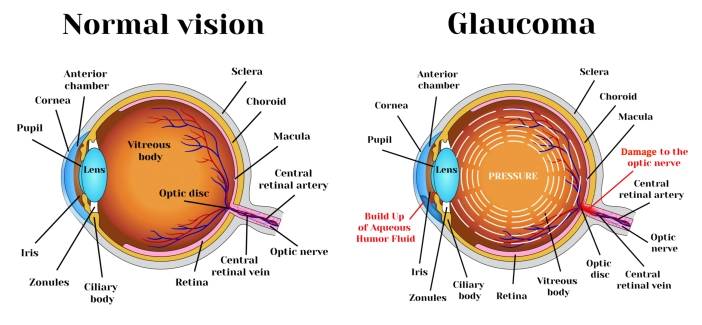
Glaucoma refers to a group of eye conditions that damage the optic nerve, the structure responsible for sending visual information from your eyes to your brain. This damage is often linked to elevated eye pressure (intraocular pressure or IOP), but glaucoma can still occur even when eye pressure is within a “normal” range.
What makes glaucoma particularly challenging is that it often develops without noticeable symptoms in the early stages.
What Visual Changes Occur With Glaucoma?
One of the most common visual changes associated with glaucoma is loss of peripheral (side) vision. This typically happens gradually and painlessly, which is why many people don’t realize anything is wrong at first.

In early glaucoma, central vision usually remains clear while side vision slowly fades. Over time, this can lead to what’s often described as “tunnel vision,” where the field of view becomes increasingly narrow. Central vision is often affected only in the later stages of the disease.
The image above shows a simulation of what glaucoma-related vision loss may look like, with darker or blurred areas around the edges of vision. While everyone’s experience is different, it highlights why glaucoma can progress unnoticed without proper testing.
This is also why glaucoma cannot be detected with a simple vision test alone—specialized imaging and visual field testing are essential.
Who Should Be Especially Careful?
Anyone can develop glaucoma, but your risk is higher if you:
- Have a family history of glaucoma
- Are over age 40 (risk increases with age)
- Have higher eye pressure
- Have thinner corneas
- Have diabetes or high blood pressure
- Use steroid medications long term
If any of these apply to you, regular comprehensive eye exams are especially important.
How Optometrists Help Detect Glaucoma
Optometrists play a key role in early glaucoma detection, often before any vision loss is noticeable. At Clarity Eyecare in Surrey, we offer in-depth glaucoma evaluations using advanced diagnostic technology to assess both eye structure and visual function.
Our Glaucoma Testing Includes:
Intraocular Pressure (IOP) Measurement
Checking eye pressure is a foundational part of glaucoma screening and ongoing monitoring.
Optical Coherence Tomography (OCT)
We use the NIDEK Duo2 OCT to obtain detailed, high-resolution images of the optic nerve and retinal nerve fiber layer, allowing us to detect subtle changes early.
Widefield Retinal Imaging
With Optomap widefield imaging, we can capture up to 200 degrees of the retina in a single image, giving us a detailed view of the optic nerve and peripheral retina—often without dilation.
Visual Field Testing
Because glaucoma affects how you see, not just how your eye looks, visual field testing is essential. We use the RetinaLogik RVF200, an advanced augmented-reality visual field system designed for comfort and efficiency.
Pachymetry
Measuring corneal thickness helps us interpret eye pressure readings more accurately and better assess your individual glaucoma risk.
Managing Glaucoma: What Happens After Diagnosis?
While glaucoma can’t be cured, it can be managed, especially when caught early. Depending on your needs, glaucoma care may include:
- Prescription eye drops to lower eye pressure
- Regular monitoring with imaging and visual fields
- Co-management with an ophthalmologist if laser or surgical treatment is required
The goal is simple: preserve your vision for life.
Why Glaucoma Awareness Month Matters
Glaucoma-related vision loss is permanent—but early detection can make a significant difference. Glaucoma Awareness Month is a reminder that eye exams are about more than seeing clearly; they’re about protecting your long-term eye health.
Book a Glaucoma Evaluation in Surrey
If you’re looking for a glaucoma assessment in Surrey, BC, our team at Clarity Eyecare is here to help. We combine advanced diagnostic technology with personalized care to give you a clear understanding of your eye health.
👉 Book your comprehensive eye exam or glaucoma evaluation today and take a proactive step toward protecting your vision.